We made another science experiment with Rostyslav.
This time, we built a simple coherer, one of the earliest devices used to detect electromagnetic waves.
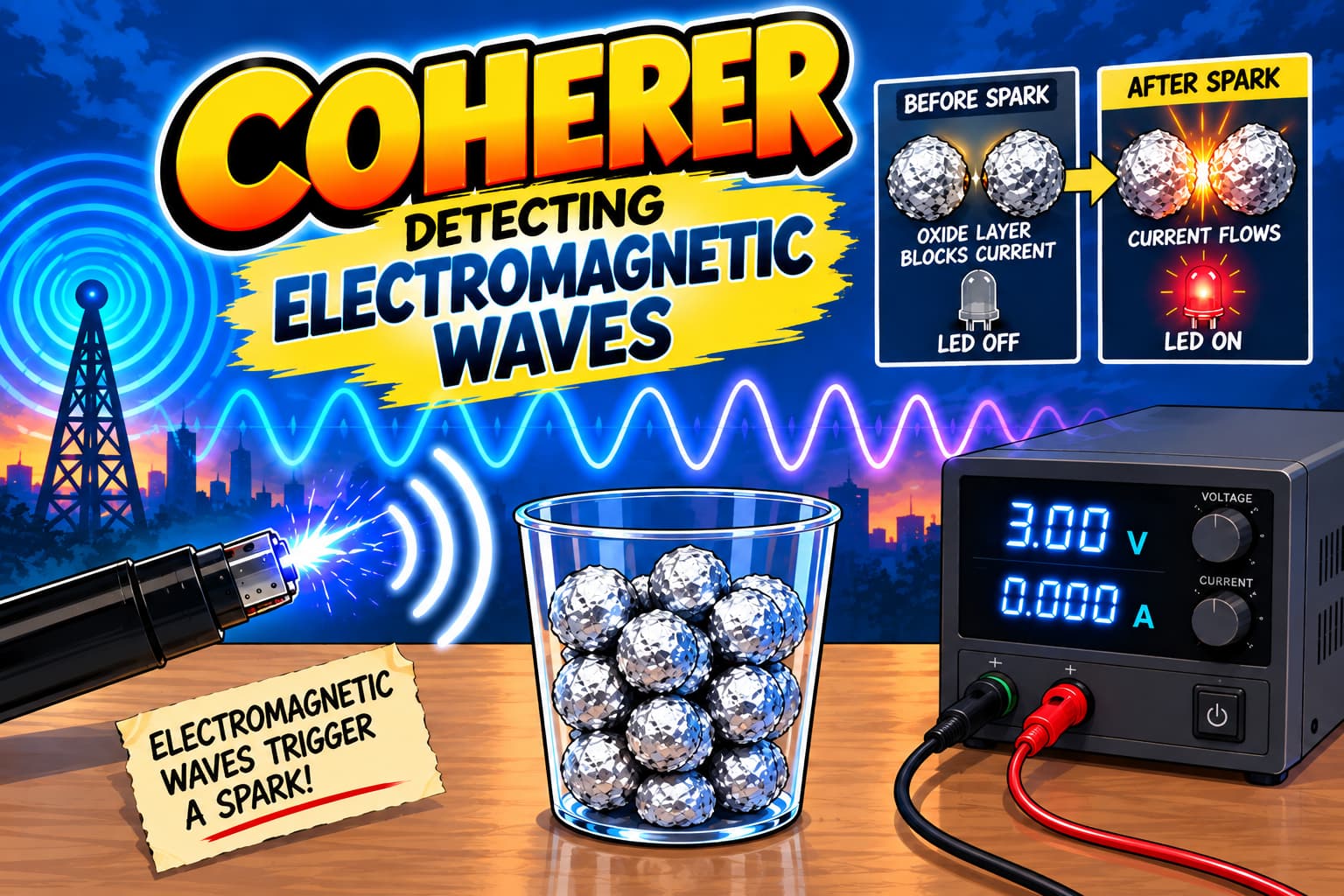
For the experiment, we used a cup with small aluminum foil balls, a power supply, an LED, and a piezo igniter from a lighter.
Aluminum is covered with a very thin oxide layer. This layer does not conduct electricity well, so normally almost no current can pass between the foil balls and the LED stays off.
But when we make a spark with the piezo igniter, it creates a short electromagnetic pulse. The contacts between the foil balls start conducting electricity better, current begins to flow, and the LED turns on.
Then we hit the table with our hand. The foil balls move, the contacts between them change, and the LED turns off again.
It is a very simple experiment, but the coherer was invented in the 19th century and became one of the first devices used to detect electromagnetic waves.
You can see the full experiment in the video below.
Leave a Reply